
 UPDATE! October 1st, 2023: This version of the website will no longer receive updates. Please transition to the new website for the best experience.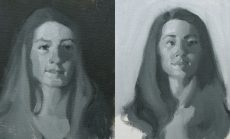
Week 1: Value With
In week one, you’ll explore the foundational concept of value, using a black-and-white palette to organize light and dark through notan and chiaroscuro. Bill Perkins begins with a lecture on tonal hierarchy and value grouping, then challenges you to complete multiple 30-minute portrait studies from high- and low-key lighting setups. You’ll focus on simplifying shapes into grouped value zones, keeping the light and dark families separated, allowing you to build clarity and strength in your value structure.
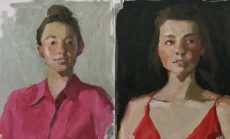
Week 2: Saturation With
In week two, you’ll explore color saturation by organizing colors into clearly defined levels of intensity. Bill Perkins introduces how saturation interacts with value and light, then presents four lighting setups that each demand a different balance of saturation. You’ll use a limited palette to separate neutral, mid, and high saturation zones, observing how saturation shifts across form and environment. The exercises train you to compare and adjust saturation in context, creating depth and harmony within a restrained color range.
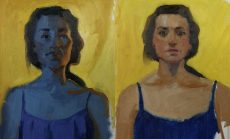
In week three, you’ll focus on integrating complementary colors to create visual tension, harmony, and balance. Bill Perkins explains how warm and cool complements influence one another while he guides you through a series of portraits that challenge you to push complementary contrasts across the figure, clothing, and background. You’ll learn to mix complements to harmonize and neutralize color mixtures and use complements to enhance form and spatial depth.
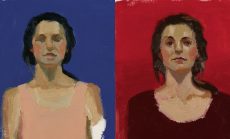
In week four, you’ll develop your understanding of color temperature by organizing warm and cool colors across value zones. Bill Perkins presents examples of both subtle and dramatic color temperature lighting, including setups with opposing light sources. You’ll paint quick studies that isolate temperature variation within light and shadow families, clothing, background, and skin. These exercises will help you develop control over subtle temperature shifts and clarify form without relying on detailed rendering.
Week 5: Hue With
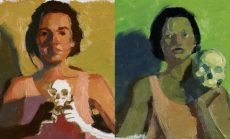
In week five, you’ll explore hue relationships and how to build harmony using a full palette of warm and cool primaries. Bill will show you how to organize color families while retaining control over value and temperature. Through four timed portrait exercises, you’ll learn to build compelling, harmonious paintings by working from big color relationships to refined accents while remaining efficient in your color choices.
Common Questions
This course is appropriate for intermediate and advanced levels.
This course includes downloadable assignment PDFs, that help you practice the materials taught by instructor Bill Perkins. Keeping up with these assignments will maximize your learning outcomes.
A material PDF list is linked in each lesson under the description. Please check the file to see what you need to prepare.
Most New Masters Academy courses are designed to be done traditionally or digitally. Software changes constantly, but the fundamentals stay the same. It will be up to you to translate the information that you are learning to your software of choice.