
 UPDATE! October 1st, 2023: This version of the website will no longer receive updates. Please transition to the new website for the best experience.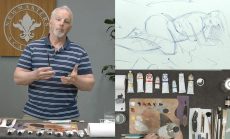
In week one, Steve Huston gives you a comprehensive overview of painting materials before introducing the figure as a balance of gesture and structure. You will learn how to connect forms with long-axis curves and use simple shapes such as cylinders, boxes, and eggs to orient the body in space.
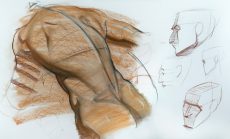
In week two, you will study parts of the figure, focusing on the head and torso. Steve Huston explains how to use simple landmarks to establish the rhythm and connection of forms.
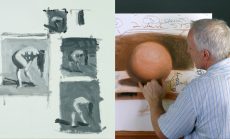
In week three, Steve Huston dives deeper into tonal design and introduces you to the laws of light. You will analyze masterworks through simplified thumbnails, learning to compress values into simplified groupings. You will then apply these lessons to the figure.
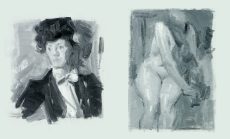
In week four, Steve Huston demonstrates how to translate tonal design into oil painting through a series of black and white figure studies. He shows how value structure alone can carry the strength of a painting, focusing on the separation of light and shadow, the use of gradations, and the control of edges.
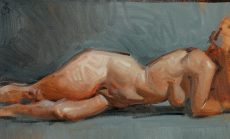
In week five, Steve Huston explores two influential approaches to limited color. He demonstrates the Zorn palette of white, black, red, and yellow ochre, as well as the Brown School method, showing how master figure painters achieved a wide range of effects with a restricted set of pigments.
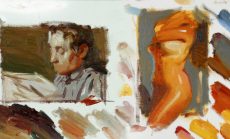
In week six, Steve Huston demonstrates how to expand from limited palettes into a broader range of color. He shows how warm and cool versions of each primary can be balanced while keeping values consistent, and how subtle shifts in temperature affect the sense of form and space.
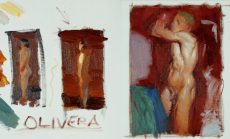
In week seven, you will apply color harmony principles directly to figure painting. Through a series of thumbnail studies and a full figure demonstration, Steve Huston explores different ways of organizing color, including warm–cool balance and dominant hue keying.
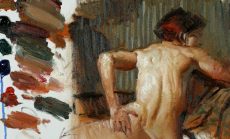
In week eight, Steve Huston brings together the ideas of gesture, structure, value, and color in a sustained, full-palette painting demonstration. You will learn to utilize gradations, broken edges, and subtle color accents to unify the figure and background, creating a harmonious and complete painting.
Common Questions
This course is appropriate for intermediate and advanced levels.
This course includes downloadable assignment PDFs, that help you practice the materials taught by instructor Steve Huston. Keeping up with these assignments will maximize your learning outcomes.
A material PDF list is linked in each lesson under the description. Please check the file to see what you need to prepare.
Most New Masters Academy courses are designed to be done traditionally or digitally. Software changes constantly, but the fundamentals stay the same. It will be up to you to translate the information that you are learning to your software of choice.